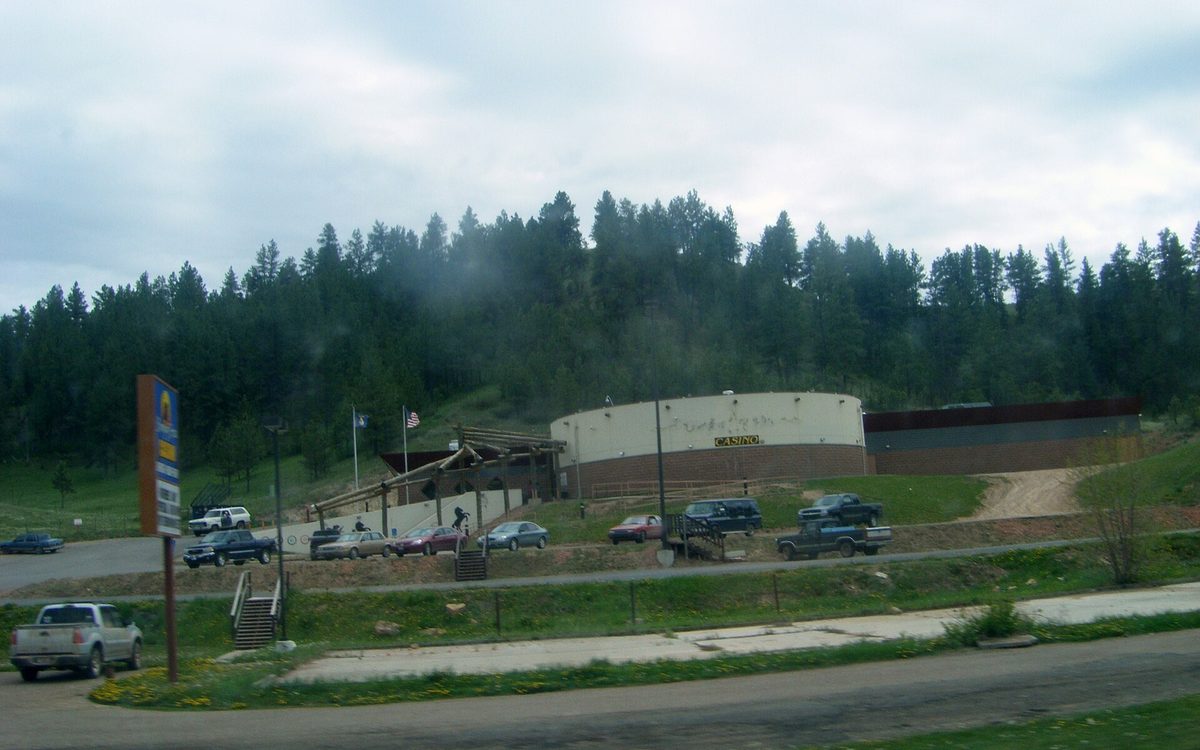
The other is a Class III video gambling machine operated under a federal compact. They look the same, but they are not the same thing, and the difference goes all the way back to a 1988 federal law.
The practical consequence? A visitor who does not know the legal footing of the tribe whose casino they have entered cannot tell from the carpet pattern or the screen animation what kind of gaming they are actually playing. And the state of Montana cannot treat every reservation the same way.
IGRA splits tribal gaming three ways
Congress enacted the Indian Gaming Regulatory Act in 1988. The law, as the Montana Department of Justice describes it, directs a state, when requested by a tribe, to negotiate for Class III gaming on Indian reservations. It also does something else: it builds a three-tier system—Class I, Class II and Class III—that controls what a tribe can offer and what role the state plays.
Class I covers traditional forms of Indian gaming associated with tribal ceremonies or celebrations. (The full statutory language merits a separate check, but the ceremonial intent is the part no one disputes.)
Class II includes bingo and related games. This is where the machine confusion begins. Montana’s Gambling Control Division, in its FY 2023–FY 2024 biennial report, points out that Class II electronic machines “may resemble Class III video gambling machines” while functioning as electronic aids to the play of bingo. The appearance is deliberate, and it is deceptive to anyone who thinks a slot is just a slot.
Class III is the category most people picture when they hear “casino.” It covers video gambling machines and other casino-style games. It is the class that brings the state of Montana directly into the transaction.
Class III does not exist without a compact
Federal law preempts state law on Indian reservations when it comes to gaming. That means Montana’s own gambling statutes do not simply extend onto tribal land. Instead, IGRA requires a tribe and the state to negotiate a compact before any Class III gaming can be conducted on the reservation—by tribal members or nonmembers alike. No compact, no lawful Class III machines.
This is not a formality. It is the lock that determines whether a casino floor in Montana carries what a visitor from Las Vegas would recognize as a full-throated slot machine or something that merely mimics one.
The Montana Department of Justice currently lists Class III compacts with five of the state’s seven reservations. Two specific agreements illustrate how this works in practice.
In December 2012, Montana and the Chippewa Cree Tribe of the Rocky Boy’s Indian Reservation signed a new Class III tribal-state gaming compact. The U.S. Department of the Interior approved it on February 4, 2013. More recently, Montana and the Assiniboine and Sioux Tribes of the Fort Peck Indian Reservation signed a compact in December 2023; federal approval came on January 23, 2024. Each approval triggers a Federal Register notice, the administrative step that makes the agreement final under federal regulations.
Those are two of the five compacts, but they are the only ones fully documented in the state’s current published material. For the other reservations, a visitor needs to check directly with the tribe or the state’s Gambling Control Division. The five-of-seven figure is official, but the full list has not been collected in a single publicly searchable ledger.
Why the rulebook changes from reservation to reservation
A tribe without a Class III compact cannot run video gambling machines. It can, however, run Class II bingo aids that look, from the player’s chair, like video slots. So a casino on one reservation may feel packed with slot-style action when, legally, every machine is an extension of a bingo hall network. Drive to a tribe that does hold a compact, and the same-looking machines are Class III devices governed by the terms of a state agreement.
This is why a generic statement like “tribal casinos in Montana have slots” is dangerous. Five reservations have the right to offer them under a compact. Two do not. The Gambling Control Division’s biennial report makes clear that Class II machines are not subject to a state compact. A casino could be running them lawfully without any state sign-off beyond the baseline federal permissions.
The takeaway is not that one class is better. It is that the federal system prevents a uniform answer. A player who bets without knowing which class of machine they are playing is betting without knowing the governing law.
What the screen cannot tell you
Montana’s gambling landscape gets even muddier when visitors mistake a tribal Class III machine for a state-licensed video gambling machine, or when they assume the state’s Sports Bet Montana product operates the same way on tribal land. The Gambling Control Division’s published reports do not resolve those relationships or say whether Sports Bet Montana is available through tribal facilities, how it would be licensed, or how it would interact with a tribal compact’s terms.
A Class II bingo aid and a Class III video slot can sit side by side on the same floor, indistinguishable to anyone who has not seen the compliance paperwork. The only reliable guide is the governing compact, the federal approval behind it, and the tribe’s own disclosures—not the graphics, the cabinet, or the sign above the door.
That is the practical limit that the public sources establish. Facility-specific rules on age, ID, payment methods and self-exclusion programs are not covered in a universal way. They rest with the individual tribe or the regulator. A visitor who needs those answers has one move: ask the casino at that specific address, that specific week. Because in Montana tribal gaming, the machine you cannot tell apart from the next one is exactly the machine the law cares about most.