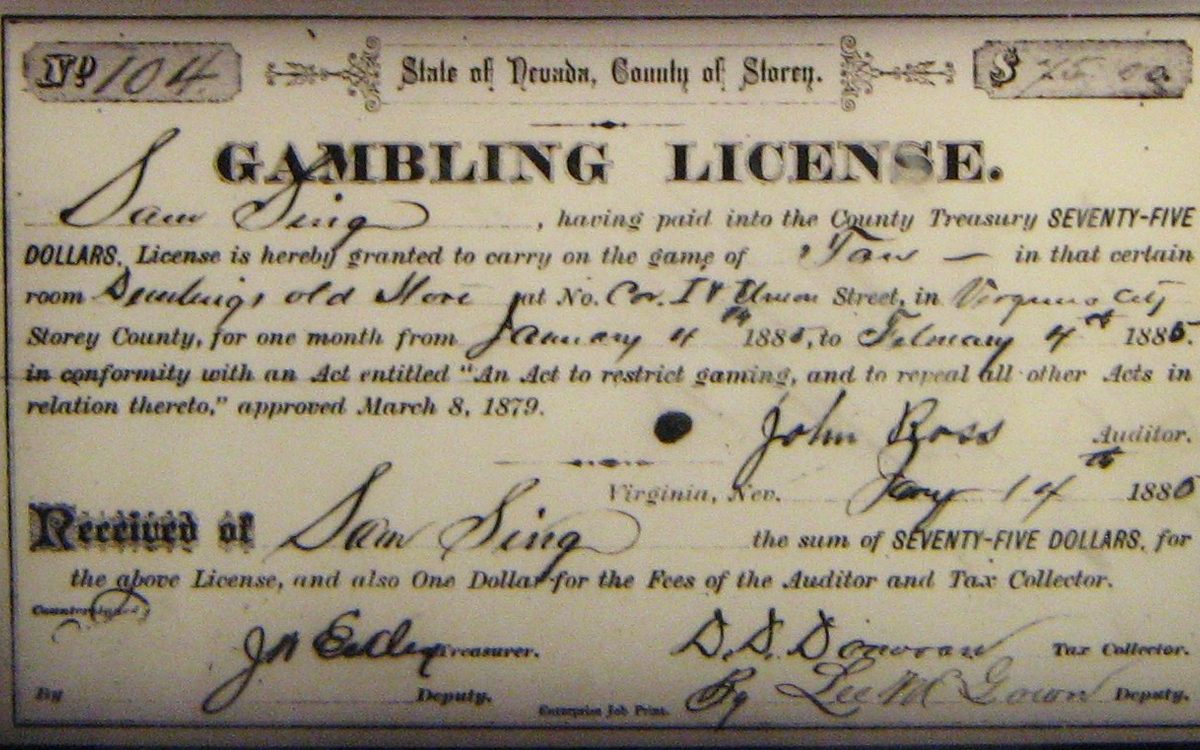
The assertion fails unless the legal operating company, the license number and the issuing regulator’s own public record all line up. For a Montana resident, even a verified foreign license does not make the casino licensed by Montana.
Start with the legal baseline in Montana
The Gambling Control Division regulates gambling in the state, including sports betting, the Montana Lottery and horse racing. But the Division has published a set of frequently asked questions that cuts through most online-casino marketing. It states that the only form of legal online gambling in Montana is raffles sponsored by nonprofit organizations that sell tickets online. No other internet gambling is legal, the Department of Justice says.
The department also maintains a licenses-and-permits page that it calls a complete list of the licenses and permits required to offer gambling in Montana. You will not find an authorization for online slots, live-dealer blackjack or poker run by a company based in Curaçao or Malta. The department repeats the point: only activities specifically and clearly authorized in statute or rule are allowed, and all other public gambling activities are illegal. That is the floor. Every subsequent check you do on a casino’s claim happens against that reality.
None of this addresses whether a player who deposits with an unlicensed site faces criminal liability—that is a separate question this article is not built to answer. The practical point is that Montana treats the overwhelming majority of online casino offers as outside its authorization system, and no amount of fine print on a casino’s “Regulation” page changes that.
Read the casino’s license claim as a set of identifying details
A casino that wants to look regulated will put a regulator’s logo somewhere visible—often the footer, the “About Us” page, or a dedicated license page. What you need to pull out of that page are three pieces of data: the full legal name of the operating company, the license number, and the exact name of the regulator that supposedly issued it. A claim that says nothing more than “Licensed and regulated” is not a verifiable claim. It is a decoration.
The absence of a license number or the use of a misspelled regulator name (“Malta Gaming Authority”) does not, by itself, prove fraud, but it tells you the claim is incomplete. Treat it as a signal to dig rather than a verdict. The same goes for a badge that is a flat image file with no hyperlink to a register page. Some regulators do require clickable seals that lead directly to a verification page; this article cannot confirm a universal standard. A non-clickable badge does not make a casino a scam, but it removes the simplest way to validate the claim in one click. You will now have to do the legwork manually.
Search the regulator’s own register
The United Kingdom Gambling Commission, as one sourced example, runs a Public Register that provides details of all businesses and individuals it licenses. If the casino’s footer says it holds a UKGC license, go to that register. Do not settle for a screenshot of a certificate embedded on the casino’s site.
Enter the license number you collected. The register entry should show a legal entity name that matches, letter for letter, the operating company listed by the casino. It ought to show the domain or trading name under which the company is permitted to operate. It will show a status—active, suspended, revoked. If the domain in the register does not match the site you are on, or if the entity is listed as surrendered, the badge on the casino site is either outdated or misapplied. This cross-referencing method works with other regulators that maintain a public register, but the exact search fields and the way domains are listed vary. Not every regulator makes it easy. The fact that a register exists does not announce itself on the casino’s terms page; you have to find it yourself, usually via a search for the regulator’s name followed by “license register”.
When the register search returns nothing for the number you hold, you have a discrepancy. That discrepancy could mean the number is fabricated, or it could mean you searched the wrong database—a few regulators separate operator licenses from software licenses and do not cross-list them. The existence of a register does not guarantee that the casino’s claim will resolve in sixty seconds. Some registers are clunky, some are updated on a lag, and some are hosted in languages you may not read. The principle is what matters: the casino’s claim is only as good as the regulator’s own contemporaneous record, and you must be the one to pull that record.
Check what the license actually covers
The words on the license matter. Montana’s operator license, as the Department of Justice defines it, authorizes a person to offer certain gambling activities to the public: bingo, card games, keno, sports pools, sports tabs and video gambling machines. That is an operator license. It means the holder can run the game and manage the wagers.
A remote gambling software license, in contrast, is defined by the UK Gambling Commission as authorizing a business to manufacture, supply, install or adapt gambling software through remote communication. It does not, by itself, authorize the holder to operate a casino that takes deposits from players. A casino site may display a UKGC badge that, when you finally trace it to the register, turns out to be a software-supplier license held by a company that provides the platform. The actual operator—the entity holding player funds and setting house rules—may be licensed elsewhere, or not at all. The badge on the homepage will rarely volunteer this distinction. You need to read the register entry in full.
The same principle holds for other jurisdictions. A license issued to a B2B supplier is not the same instrument as one issued to a B2C operator. If a casino’s license claim leads you to a company that is permitted only to supply games, the casino’s claim is at best incomplete. Whether it is deliberately misleading is a question of intent, which you cannot adjudicate from the outside. What you can do is note that the claim does not cover the activity you, as a player depositing money, are engaged in.
Understand the limits of a successful check
A foreign register entry that matches the casino’s legal name, license number, domain and status tells you one thing: that a particular regulator has granted that company a particular permission. It does not tell you that Montana considers the operation legal. The Montana Department of Justice’s license list contains no entry for online casino games operated by an overseas company, and the department has been explicit that only specifically authorized activities are allowed. The UK Gambling Commission’s Public Register does not override Montana statute.
Dispute resolution adds another layer of uncertainty. The UKGC instructs consumers to complain directly to the gambling business and follow its internal complaints process. That path may work within the UK regulatory perimeter, but it is far from clear how a Montana resident would enforce a judgment against an operator based in Gibraltar or the Isle of Man. A regulator in Europe is not a consumer-protection agency for the United States, and a verified license is not a guarantee that your funds are recoverable.
If a casino fails to pay a withdrawal, a record in a public register abroad does not compel a Montana bank to reverse a card transaction, nor does it grant a Montana district court jurisdiction. The process of seeking redress across borders is slow, expensive and often futile. A license is a permission to operate, not a regulator’s guarantee of customer payouts. You should treat any claim to that effect, whether made by a casino or an affiliate site, as unsupported.
The Montana Department of Justice’s own published list of permitted gambling activities contains no entry for online poker, slots or live-dealer games run by an overseas company. A public register match in Malta, Curaçao or the UK confirms only what that regulator has granted—not what Montana permits. Until a dispute lands in front of a court that can enforce a judgment across borders, the space between a verified foreign license and a remedy that puts money back in a player’s pocket stays wide.